
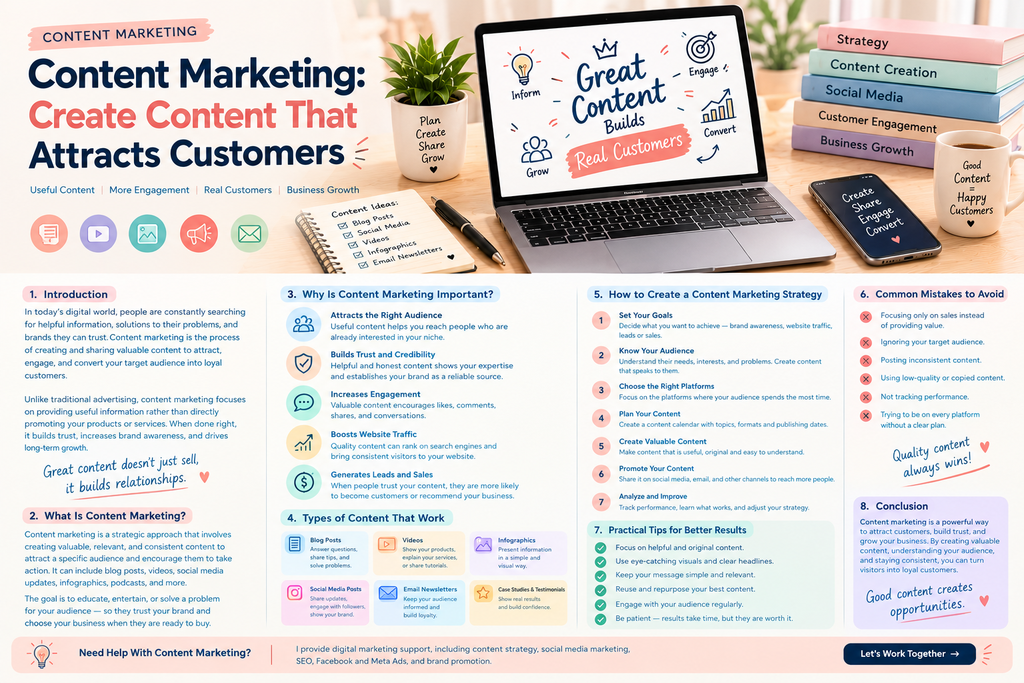
Content Marketing: Create Content That Attracts Customers
Introduction
In today’s competitive digital world, customers are constantly searching for useful information, solutions to their problems, and businesses they can trust. Content marketing helps businesses connect with these customers by providing valuable, relevant, and engaging content.
Instead of focusing only on selling products or services, content marketing aims to educate, inform, entertain, and build relationships with a target audience.
Whether you run a small business, an online store, a professional service, or a digital marketing agency, an effective content marketing strategy can help you increase brand awareness, attract potential customers, and support long-term business growth.
In this guide, you will learn what content marketing is, why it matters, which content formats to use, and how to create a strategy that attracts the right audience.
1. What Is Content Marketing?
Content marketing is a strategic approach to creating and sharing valuable content to attract and engage a specific audience.
It can include blog articles, social media posts, videos, infographics, email newsletters, podcasts, and other useful resources.
For example, a digital marketing agency might publish a blog post explaining how small businesses can improve their website’s SEO. Readers who find the article helpful may explore the agency’s services when they need professional support.
The main goal is to provide genuine value, establish credibility, and help potential customers make informed decisions.
2. Why Is Content Marketing Important?
Builds Brand Awareness
Publishing useful content helps more people discover your business and understand what you offer.
Consistent messaging and a recognizable visual identity can make your brand easier to remember.
Builds Trust and Credibility
People are more likely to consider a business when they can find helpful information about its products, services, and expertise.
Educational articles, practical guides, and genuine examples of your work can help demonstrate your knowledge.
Attracts Relevant Visitors
Search-friendly blog posts and useful social media content can help interested people discover your website.
When your content answers a specific question, it may attract visitors who are looking for information related to your business.
Supports Lead Generation
Content can encourage interested readers to take the next step, such as subscribing to a newsletter, requesting information, or contacting your business.
Supports Long-Term Growth
Well-maintained content can continue providing value after publication. However, performance depends on content quality, audience needs, competition, and distribution.
3. Different Types of Content Marketing
A strong content strategy uses formats that suit the audience, platform, and business goal.
Blog Posts and Articles
Blog posts allow businesses to explain topics in detail, answer customer questions, and support their SEO strategy.
Examples include beginner guides, tutorials, industry insights, and practical tips.
Social Media Content
Facebook, Instagram, LinkedIn, and other platforms allow businesses to share updates, educational posts, product information, and engaging visuals.
Social media content can help brands communicate directly with their audiences.
Videos and Reels
Video content can demonstrate products, explain services, provide tutorials, and introduce the people behind a business.
Short videos can communicate ideas quickly, while longer videos may be useful for detailed explanations.
Infographics
Infographics present information visually through diagrams, icons, charts, and short explanations.
They can make complex topics easier to understand and share.
Email Newsletters
Email newsletters allow businesses to share useful information, new articles, product updates, and relevant offers with subscribers who have agreed to receive communications.
Case Studies and Testimonials
Authentic case studies explain a project’s goals, approach, and results. Genuine testimonials can help prospective customers understand the customer experience.
Always obtain permission before publishing identifiable customer feedback or private project information.
4. How to Create an Effective Content Marketing Strategy
Step 1: Define Your Goals
Start by deciding what you want your content to achieve.
Your goals might include increasing brand awareness, attracting website visitors, generating qualified leads, or educating potential customers.
Clear goals help you choose suitable content formats and measure performance.
Step 2: Understand Your Target Audience
Research your audience’s interests, challenges, questions, and preferences.
Consider what information they need before choosing a product or hiring a service provider.
You can learn from customer questions, website analytics, social media conversations, and keyword research.
Step 3: Choose the Right Content Platforms
You do not need to publish everywhere.
A business that relies on visual product discovery may prioritize Instagram and Pinterest, while a professional B2B service provider may benefit from LinkedIn and educational blog content.
Choose platforms based on where your audience spends time and what your business can manage consistently.
Step 4: Research Relevant Topics and Keywords
Keyword research can help you identify the questions and topics people search for online.
For example, a digital marketing portfolio might cover:
- SEO tips for beginners.
- Facebook Ads for small businesses.
- Social media marketing strategies.
- Content planning for online brands.
- Website optimization techniques.
Use these topics to create helpful articles that match the reader’s search intent.
Step 5: Create Valuable Content
Focus on originality, accuracy, clarity, and usefulness.
Write in simple language, use descriptive headings, provide relevant examples, and organize information so readers can easily find answers.
Avoid copying competitors or publishing articles solely to fill your website.
Step 6: Build a Content Calendar
A content calendar helps you plan topics, formats, and publication dates.
For example, your weekly schedule might include one blog article, two educational social media posts, and one short video.
Choose a manageable schedule that allows you to maintain quality and consistency.
Step 7: Promote Your Content
Publishing content is only part of the process. You also need to help your audience discover it.
Share relevant blog posts on your social media pages, include useful links in newsletters, and participate appropriately in relevant communities.
Paid promotion may be useful when it supports a clear business objective and fits your budget.
Step 8: Measure and Improve Performance
Review metrics that match your goals.
For blog content, these might include organic clicks, impressions, relevant website visits, and inquiries.
For social media content, consider reach, engagement, link clicks, and meaningful audience interactions.
Use these insights to identify successful topics and improve future content.
5. Best Practices for Creating Content That Attracts Customers
To improve your content marketing efforts, follow these practical principles.
Focus on Value: Answer real questions and solve relevant problems.
Use Clear Headlines: Tell readers what they can expect from your content.
Maintain Brand Consistency: Use a recognizable tone, design style, and message.
Make Content Easy to Read: Use short paragraphs, descriptive headings, and relevant visuals.
Include a Call to Action: Give readers a suitable next step, such as reading another article or contacting your business.
Be Consistent: Maintain a realistic publishing schedule rather than posting irregularly without a plan.
Update Older Content: Review existing articles and refresh information when necessary.
6. Common Content Marketing Mistakes to Avoid
Businesses can reduce the effectiveness of their content marketing by making several common mistakes.
Avoid creating content without understanding your audience, focusing exclusively on promotional messages, publishing copied information, and ignoring content performance.
Do not assume that more posts automatically mean better results.
Instead, prioritize useful information, original ideas, clear communication, and continuous improvement.
Remember that content marketing takes time. Building an audience and establishing trust requires consistent effort.
Conclusion
Content marketing is an important part of a successful digital marketing strategy. By creating valuable blog posts, social media content, videos, and other useful resources, businesses can attract relevant audiences and build lasting relationships.
The key is to understand your audience, choose appropriate platforms, publish helpful content consistently, and measure performance against clear goals.
Rather than focusing only on selling, focus on providing value. When your content helps people understand their problems and explore useful solutions, you create stronger opportunities for meaningful business relationships.
Need Help With Content Marketing?
Are you looking to improve your online presence, develop a content strategy, or attract the right audience to your business?
I provide digital marketing support, including content marketing, social media marketing, SEO, Facebook and Meta Ads, and online brand promotion.
Let’s discuss your business goals and explore a content strategy that fits your needs.
Contact me to discuss your project and take the next step toward growing your business online.