
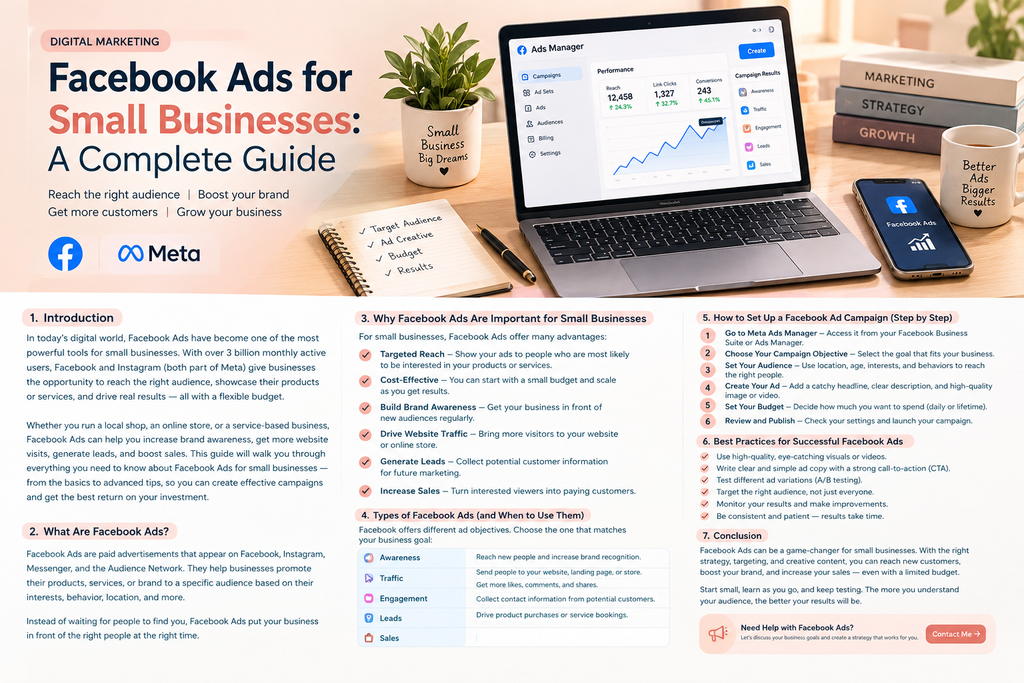
Facebook Ads for Small Businesses: A Complete Guide
Introduction
In today’s competitive digital world, small businesses need effective ways to reach potential customers, build brand awareness, and increase sales. Traditional marketing methods can be expensive and may not always reach the right audience. This is where Facebook Ads can make a difference.
Facebook Ads, managed through Meta’s advertising tools, allow businesses to promote their products and services to specific audiences online. Whether you own a clothing store, a beauty salon, a restaurant, or an online business, Facebook advertising can help you connect with people who may be interested in what you offer.
In this complete guide, we will explore what Facebook Ads are, why they matter, how to create an advertising campaign, and which strategies can help small businesses improve their results.
1. What Are Facebook Ads?
Facebook Ads are paid advertisements that businesses can display across Facebook and other eligible placements within Meta’s advertising ecosystem, including Instagram.
Unlike ordinary organic posts, paid advertisements allow businesses to select campaign objectives, define an audience, set a budget, and measure performance.
Businesses can use Facebook Ads to:
- Promote products and services.
- Increase brand awareness.
- Drive traffic to a website.
- Generate potential customer leads.
- Encourage people to contact a business.
- Promote offers and special events.
- Increase online sales.
For example, a small clothing business can create an advertisement featuring its latest collection and show it to people who may be interested in fashion.
The key is to create relevant advertisements that communicate the value of a product or service clearly.
2. Why Are Facebook Ads Important for Small Businesses?
Facebook Ads can provide several advantages when campaigns are planned carefully.
Targeted Advertising
Businesses can define audiences using available targeting options, such as location, age, and interests. The options available depend on the campaign and current platform policies.
This helps businesses focus their advertising on audiences that are relevant to their goals.
Flexible Budget
Small businesses can begin with a manageable advertising budget and adjust their spending according to campaign performance.
However, advertising costs and results vary depending on competition, audience, creative quality, and other factors. A small budget does not guarantee sales or leads.
Brand Awareness
Advertising can introduce a business to people who have not discovered its products or services before.
Consistent branding, clear messaging, and attractive visuals can help people recognize and remember a business.
Website Traffic
Businesses can use suitable campaign objectives to encourage people to visit their websites, explore products, and learn more about their services.
Lead Generation
Lead-focused campaigns can help businesses collect inquiries from potential customers through eligible forms or other supported contact methods.
Businesses should explain how customer information will be used and handle personal data responsibly.
Measurable Performance
Meta Ads Manager provides reporting metrics that help advertisers evaluate campaigns and identify opportunities for improvement.
3. Types of Facebook Advertising Campaigns
Choosing the right campaign objective is an important part of advertising success. The objective should match the result your business wants to achieve.
Brand Awareness
This approach helps introduce your business to new audiences and improve recognition.
Best for: New businesses, product launches, and brand introductions.
Traffic Campaigns
Traffic campaigns are designed to encourage people to visit a destination, such as a website or landing page.
Best for: Businesses that want more visitors to explore their online content.
Engagement Campaigns
Depending on the selected setup, engagement-focused campaigns can help encourage interactions with eligible content or communication channels.
Best for: Businesses that want to increase meaningful interactions with their content.
Lead Generation Campaigns
Lead generation campaigns help businesses collect inquiries from interested people through supported lead forms, messaging, or other available conversion locations.
Best for: Education consultancies, service providers, real estate businesses, and agencies seeking potential customers.
Sales Campaigns
Sales-focused campaigns are designed to encourage purchases or other valuable conversion actions.
Best for: Online stores and businesses with suitable conversion tracking and purchasing options.
Before creating a campaign, review the available objectives in Ads Manager and select the one that most closely matches your business goal.
4. How to Set Up a Facebook Ads Campaign
Follow these steps to create a campaign for your small business.
Step 1: Prepare Your Business Assets
Make sure you have the necessary business assets, such as a Facebook Page and access to the appropriate Meta business tools.
Depending on your campaign, you may also need a website, landing page, messaging setup, or lead form.
Step 2: Open Meta Ads Manager
Go to Meta Ads Manager and sign in using the account that has the necessary advertising permissions.
Review your account setup and make sure your business information and payment settings are correct.
Step 3: Choose Your Campaign Objective
Click the option to create a campaign and choose an objective that fits your goal.
For example, choose a lead-focused objective if your primary goal is to collect inquiries from potential customers.
Choose carefully because your campaign objective influences how Meta optimizes delivery.
Step 4: Define Your Target Audience
Consider who is most likely to need your product or service.
Think about:
- The location of your potential customers.
- Relevant age groups, where appropriate.
- Customer needs and interests.
- The problems your product or service solves.
- Whether your offer is suitable for the selected audience.
Avoid making your audience unnecessarily narrow. Test suitable audience options and evaluate the results.
Step 5: Set Your Budget and Schedule
Decide how much you can reasonably spend on advertising.
Depending on the campaign setup, you may be able to choose a daily or lifetime budget and specify when the campaign should run.
Start with an amount you can afford to test, monitor spending, and adjust your plan based on evidence.
Never assume that spending more will automatically produce better results.
Step 6: Create Your Advertisement
Your advertisement should include:
- A relevant, high-quality image or video.
- A clear headline.
- A concise description of your offer.
- A strong call to action.
- Accurate information about your product or service.
For example, a clothing business could highlight a new collection, explain its key benefits, and invite interested customers to explore the products.
Step 7: Review and Publish
Before publishing, check your spelling, creative, destination link, audience, budget, schedule, and campaign objective.
Make sure the advertisement follows Meta’s advertising policies.
Submit the campaign for review and monitor its status in Ads Manager.
5. Best Practices for Successful Facebook Ads
Creating an advertisement is only the beginning. A thoughtful strategy can help you learn what works for your audience.
Use High-Quality Creatives
Use clear images or videos that show your product or service accurately. Keep the design consistent with your brand identity.
Write Compelling Ad Copy
Explain what you offer, why it matters, and what the viewer should do next.
Keep your message simple and relevant. Avoid exaggerated promises or misleading claims.
Test Different Variations
You can test different headlines, visuals, descriptions, and suitable audiences.
Change variables in a structured way so you can understand which differences may be influencing performance.
Use a Clear Call to Action
Tell people what action they can take next, such as learning more, visiting your website, or contacting your business.
The call to action should match the campaign objective and the destination.
Ensure a Good Customer Experience
If your advertisement sends people to a website, make sure the page loads properly, works on mobile devices, and clearly explains the offer.
A strong advertisement cannot compensate for a confusing website or an unsuitable product offer.
6. Common Facebook Ads Mistakes to Avoid
Small businesses can waste advertising resources when campaigns are poorly planned.
Avoid these common mistakes:
- Running ads without a clear objective.
- Targeting an audience without understanding its needs.
- Using low-quality or irrelevant creatives.
- Writing unclear advertising messages.
- Sending visitors to broken or unrelated pages.
- Changing campaign settings too frequently without enough data.
- Ignoring campaign reports and customer inquiries.
- Expecting immediate results without testing.
A better approach is to set realistic goals, monitor performance, and make informed improvements.
7. How to Measure Facebook Ads Performance
Use Ads Manager reporting to understand whether your campaign is moving toward its intended goal.
Important metrics may include:
Reach: The number of people who saw your advertisement.
Impressions: The number of times your advertisement was displayed.
CTR (Click-Through Rate): The percentage of impressions that resulted in clicks, according to the metric definition used.
CPC (Cost Per Click): The cost associated with each click, depending on the selected click metric.
CPL (Cost Per Lead): The average advertising cost for each lead generated.
Conversions: The valuable actions people complete, such as purchases or form submissions, when appropriately measured.
Do not judge every campaign using the same metric. A brand awareness campaign and a lead generation campaign have different objectives.
Focus on the metrics that best reflect your business goals and evaluate the quality of the results, not just the numbers.
8. How Small Businesses Can Improve Their Advertising Strategy
Successful advertising often requires continuous learning and improvement.
Start by understanding your audience and creating an offer that addresses a genuine need.
Use relevant visuals and straightforward copy to communicate the value of your product or service.
Make sure your website, landing page, or messaging experience supports the action you want customers to take.
Review performance regularly, identify patterns, and test improvements carefully. If you receive leads, evaluate whether they are relevant and whether your business can follow up effectively.
Remember that advertising is one part of a broader marketing strategy. Product quality, customer service, pricing, organic content, and brand trust also influence business outcomes.
Conclusion
Facebook Ads can be a valuable marketing tool for small businesses that want to increase brand awareness, reach relevant audiences, generate leads, and promote their products or services.
The foundation of a successful campaign includes a clear objective, a suitable audience, compelling creatives, a realistic budget, and ongoing performance analysis.
Rather than relying on guesswork, businesses should test carefully, learn from their results, and improve their strategy over time.
With a customer-focused approach and consistent effort, Facebook advertising can become a useful part of a small business’s wider digital marketing plan.
Need Help With Facebook Ads?
Are you looking for ways to promote your business online, reach your target audience, or generate potential customer inquiries?
I provide digital marketing support, including Facebook and Meta Ads, social media marketing, SEO, and content strategy.
Let’s discuss your business goals and explore a suitable digital marketing approach for your needs.
Contact me to discuss your project and take the next step toward building your online presence.